Showing posts with label fantasy. Show all posts

18 January 2022

Youthful Comfort Movies 🙃


Youthful Comfort Movies

by Kristin Battestella


Put on your nostalgia goggles and swaddle yourself in these fanciful, often preposterous charmers! Good or bad, the comedy hi jinks in these once derided but now beloved and sentimental films of our youth have become comfort viewings from simpler times.


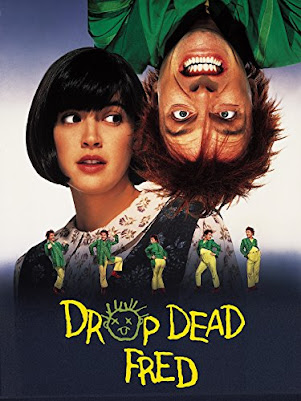
Drop Dead Fred I love this 1991 romp starring meek wife Phoebe Cates (Fast Time at Ridgemont High), her domineering mother Marsha Mason (The Goodbye Girl), and the titular imaginary friend Rik Mayall (Blackadder). Despite the unevenness between the mature break up drama and the juvenile flashbacks, there's a certain innocence to the vignettes and individual character moments – chopped off hair, paint doused old ladies, shampooed carpet perils and all. Not to mention smoking while power walking, houseboat sinking, office dalliances ruined scene stealer Carrie Fisher (Star Wars) amid the doubly nostalgic nineties phone booths, dowdy styles, little girl pink and white bedrooms, and a vintage jack in the box. Between the overbearing mother, a philandering husband, fires, getting fired, and everything else going wrong, we understand the withdraw into a fantasy childhood world. Going without the stars early was not an option, but we should have seen all the past at the start rather than utilizing flashbacks that disrupt the momentum. Fortunately, the backstory endears the over the top rowdy as viewers see the wonder lost as little girls are made to bottle up their zest – disrupting the ability to face reality as an adult. Why confront the trauma or numb it all with pills when acting like a child is such devious grown up fun? The who's actually doing what wink at the destructive imaginary antics wraps the manifested problems and emotionally abusive relationships in cozy comforts. Sound effects and graphics are dated and some fashions garish, but the now relatively tame gross out humor is delicious fun thanks to Mayall's zingers and squashed head in the refrigerator. Fred's impish support alleviates the youth crying for help as parents punish instead of taking a look at themselves. Rather than mental healthcare, we neutralize our pain with destructive vices because as grown ups with responsibilities, we can't retreat into hi jinks without consequences every time we get scared. Adults may find the surreal dream sequence resolution either profound or preposterous, and kids will probably tune out on the mud pie mischief thanks to the underlying dark themes so it's tough to know who the audience is for this facing our fears lesson. Despite the pacing flaws, one must appreciate the rowdy as well as the tender, and this lighthearted protectiveness is more enjoyable than today's dark psychological trends. Ultimately, this is about regaining joy and cutting the crap out of one's life. “Be gone, Evil One!”


Empire Records – Everyday is Rex Manning day thanks to crop tops, short skirts, combat boots, head shavings, compact discs, and Gin Blossoms in this 1995 steeped slice of life. Liv Tyler (Lord of the Rings), Renee Zellwegger (Chicago), and Robin Tunney (The Craft) carry the independent record store versus corporate buyouts and damn the man anarchy as Anthony LaPaglia (Without a Trace), Debi Mazar (Younger), Ethan Embry (Can't Hardly Wait), Rory Cochrane (Dazed and Confused), and Maxwell Caulfield (Grease 2) clash over stolen receipts, has beens, shoplifting, and vinyl legacy. The stolen money and save the store underdog tangible isn't as important as the layered themes, cries for help, and pressure for these teens to get their messy lives together when everything after high school is still up in the air. Overachievers and drugs, virgin and bad girl reputations, slackers or skaters – it's easier to turn up the music and dance but fake funerals allow the ensemble to voice their fears. Unhappy coworkers become friends having a good time in this day where nothing happens yet so much happens. Cool sunglasses, drums, and motorcycles accent what looks like a neat place to work with colorful set design, store fronts, stairs, and rooftop spaces for visual interest, angst, and self-expression. Old credit card imprinters, cassettes, and record listening booths contrast then contemporary character styles – identifiable but unique rather than typical cheerleader, jock, geek. While of its time, the well chosen soundtrack reflects the characters and events in almost musical fashion, however editing and deleted or missing scenes are apparent as people and encounters seem important then go unexplained. The ending is typical with a silly rooftop concert that makes everything fine when throughout the film each of the characters expressly shout that nothing is actually fine. If you didn't see this then the tone may be dated or even downright wacky for viewers who weren't born yet. Thankfully for those that remember the nineties promise with CD changers, music videos, askew posters, and existential quarters glued to the floor as art this is a perfect time capsule. “Say No More (Mon Amour)” is also better than the drivel today, fight me.


Summer School – From the Texas Chainsaw Massacre classroom viewing and the sofa on fire party to the test drive crashes and teens drinking on the beach – there is quite a lot in this 1987 comedy starring Mark Harmon (NCIS), Courtney Thorne-Smith (Melrose Place), and Kirstie Alley (Cheers) that would not fly today. Director Carl Reiner (The Jerk) and writer Jeff Franklin (Full House) populate the eponymous course with slackers, a beach bum gym teacher, goofy field trips, saucy foreign exchange students, strip clubs, study bribes, surf boards, cute dogs, and more horror pranks. Shoulder pads, beach gear, and one earring styles maximize the eighties charm amid going to jail on roller skates, swearing, gestures, and raunchy innuendo both now tame yet then surprising for a PG-13 picture. Roll call introductions, lighthearted tunes, and peppy montages assure everyone has their absurd good fun as punchlines, visual gags, food, oral fixations, and performances accentuate the comedy rather than rely on today's gross out extremes. Serious issues such as family troubles, teacher romance, student crushes, teen pregnancy, toxic behaviors, dyslexia, and reaching for the youths the system lets fall through the cracks are touched upon as the kids themselves believe they are failures when they are capable of much more. Grades are not a reflection of one's potential, but not every educator is in it for the students and the underachievers must make strides against the smug jerks in their way. One can't expect the premise to make sense here – the number of students changes throughout, the big test doesn't mean much, and the parents are pleased with this education experience despite all the mayhem and the still failing grades. Fortunately, there's a certain then innocence and comfort to the ease and excuses. Nostalgic audiences can zone out and enjoy the preposterous or spot another goofy quip with each re-watch. Personally, I think of that “Tension-breaker. Had to be done.” scream often these days.


19 December 2021

A Christmas Carol (2019)


Thought Provoking and Mature A Christmas Carol (2019)

by Kristin Battestella


To allow himself rest in the afterlife, the deceased Jacob Marley (Stephen Graham) aides The Ghosts of Christmas Past (Andy Serkis), Present (Charlotte Reily), and Future (Jason Flemyng) in orchestrated a change for good in his soulless, corrupt business partner Ebenezer Scrooge (Guy Pearce). Scrooge's bitter ways effect the health, happiness, and welfare of his clerk Bob Cratchit (Joe Alwyn) and his wife Mary (Vinette Robinson), but confronting Scrooge's horrible life may not be enough to redeem the miser...

The 2019 BBC miniseries A Christmas Carol produced by Ridley Scott (Prometheus) and Tom Hardy (Venom) is a darker imagining of the perennial Charles Dickens tale with episodic chapters originally called “The Human Beast,” “The Human Heart,” and “A Bag of Gravel” airing stateside on FX as one three hour event. Director Nick Murphy (The Last Kingdom) and writer Stephen Knight (Peaky Blinders) obviously have more time to fill than the more traditional, idyllic, paired down tellings. Rather than the same old saccharin “God bless us, everyone!” these days viewers expect television to bring on the relatable Victorian bitterness. We often glorify the past, but this A Christmas Carol doesn't underestimate an audience intimately familiar with weighing every action by gain mentalities and who you know and how much money you have getting you anywhere in life uphill struggles, abuses, and humiliation. Urination, grave desecration, bastards and F bombs immediately set this adult tone before ominous winds, crows, eerie graveyards, and a frosty ethereal London 1843. Church bells, purgatory supernatural, and almost Shakespearean asides accent the six feet under coins on the eyes and no rest in peace as hellish forges, chains, and swinging coffins invoke a much more grim penance. Phantom sleighs dragging the chained behind lead to echoes between the counting house and the spirit realm. Rattling in the fireplace and cutaways to the point of view from an empty chair realistically lay the forthcoming between worlds – embracing the Victorian off kilter faerie parallel rather than just a sudden, mere holiday intervention as is often portrayed. Time is taken in A Christmas Carol with hand washing a la Lady Macbeth and ghostly versus guilt ticking clocks. Hypocritical analysis digs deeper than humbug archetypes, and great horror imagery sets off the familiar but transposed text delivered deftly and naturally without any try hard ye oldeth. Villainous silhouettes grow darker when we get the famous workhouses, prisons, and let them die disturbing. Shadows and black horses take the place of the locomotive on the stairs as other animal kindnesses born out of cruelty and hopeful lantern flashes contrast the creaking gate and ghostly door knocker. While most adaptations have a quick start or only run eighty minutes themselves, here it takes an hour before we even get to the Scrooge and Marley encounter. This A Christmas Carol simmers and broods, for these apparitions have been a long time coming with thumps in the night, groaning houses, clicking locks, and guilty consequences. Chilling reasons for that scarf usually around Marley's jaw become macabre shocks as A Christmas Carol takes the hallmarks of a story that's tough to do wrong and runs with the one on one encounters, twofer deliveries, and fiery flashbacks. Faulty subcontracts and bribing officials led to bloody workhouse disasters, gas explosions, and coal mine collapses while Scrooge passed the blame and forged those symbolic chains.


The refreshing script simplifies the Dickensian wordiness yet we do get some of the sardonic undigested beef quips amid self-aware glances at the camera and eternity spent in a forest of abandoned Christmas trees and forgotten childhood memories. An act of kindness said to be given to someone in pain is rejected as the abused perpetuate abuse, dealing in greed and people as commodities. Those scarred mentally and physically by the cruel, cost cutting overseers rightfully call upon revenge like a reverse It's A Wonderful Life orchestrating this spiritual comeuppance. Snowfall and ash in the air mix as other realms and childhood fears merge with violent canes, creepy singsongs, and pets caught in the chilling crossfire in a house that can't afford another mouth to feed. Hiding behind the bed curtains is used to frightful effect as A Christmas Carol shows what the book implies yet leaves nasty suggestions to the shadows. Hope, however, can be found small as a mouse, big as a camel, or even in fanciful book illustrations come to life to save a boy's mind from his torturous reality. Unfortunately, people are only worried about themselves. Gifts are just unwritten debts and unprofitable affections. These spirits force us to relive the darkest moments of the picture we paint so we may unlearn the ills that have shaped who we are. Here A Christmas Carol feels timely and modern, layering the past with disturbing familiar faces and real world terrors that harden a boy's heart and break our Christmas spirit. Magical deflections, pleas to go home, and facing the horrors combine for superb duality and visualizations as children may or may not see spirits and two of the same character appear in the same place at once. Loom factories become massive calculators in an industrial fantasy hitting home the cold hard numbers. Tragedy for many is opportunity for the few, and that's just good business to see pounds instead of people and exploit their weaknesses accordingly. Shameful humiliations done on Christmas Day are born not out of desire, but agonizing experiments testing the solemn limits of what good people will do for money. Viewers contemplate how far A Christmas Carol will go in examining the the value of human virtue, and Merry Christmas greetings are said for all the wrong reasons – justifying the prayers, warnings, and curses that one day the truth will look us in the mirror. Mining survivors unite in memorial choirs, and the poor make up the difference with happiness and love instead of itemizing priceless intangibles. Halos at the altar suggest salvation, but admitting regret or that love came too late to stop hatred isn't enough against chilling figures in the dark, haunting drownings, cracking ice, and death shrouds. Tolling bells and heartbeats announce the fatal consequences as we accept our deserved fate. For all the spirited meddling, it is up to us to change and act for the benefit of others without expectation of reward as A Christmas Carol concludes in full Dickensian compassion.

The First Chapter of A Christmas Carol is excellent as is the second. However, when expanding such a short novella, the balance is bound to be uneven. Here Christmas Past is featured for almost an hour and a half – leaving twenty minutes for The Ghost of Christmas Present and only ten minutes for The Future. After such depth with The Past, viewers wonder why Andy Serkis just didn't play one composite spirit? Upon moving on from him with only forty-five minutes left, suddenly this A Christmas Carol is rushed, running out of time, and on the same pace as any other adaptation. Onscreen Christmas Eve 1843 openings don't match Marley's 1842 grave marker and the supposed seven years since his passing, but nor do the 1851 death dates. The melancholy focus will tire some audiences, yet the quick finale feels like this should have been longer – a four hour, two night event. All that Past just opened Scrooge up so The Present can show warmth by making him wear a scarf and tinge his heart in a third of the time? The often excised Ali Babi brings a dash of childhood wonder into such grim, but making The Ghost of Christmas Present a woman to soften up Scrooge negates the progressive gender change and defeats the purpose of ditching young Scrooge's for love or money choice. While losing the seemingly essential festive Fezziwig works wonders, the exclusion of eavesdropping on Nephew Fred's is a missed opportunity when you've made his mother The Ghost of Christmas Present. The Past repeatedly tells Scrooge this is not a game – long after Scrooge stops making passive aggressive asides – but Fred's mocking his uncle and Scrooge's family resentment would have fit in well with this bitter A Christmas Carol. Viewers begin to notice famous wording and elements missing. Did we skip an episode? Did the editor loose a reel? My favorite moment with Ignorance and Want is also excised when the decrepit child motifs would have fit these acerbic themes, and the casting lots on the bed clothes bargaining is another profiting on death horror that is surprisingly absent as if the writers simply didn't finish adapting the fourth stave of the book or the production plum ran out of time and money. At times A Christmas Carol doesn't seem to trust what it has in these exceptional performances and the timeless source material, adding in extra dialogue when looking at the camera directly implies the fourth wall is already broken and the spiritual work is coming for us next. Some truly good or innocent and in tune characters are said to see the usually invisible Scrooge and company – a haunting provocation wonderfully bringing this seeming radical A Christmas Carol right back to Dickens, for “I am standing in the spirit at your elbow.”


Occasionally Guy Pearce (Brimstone) looks top hat debonair as Ebenezer Scrooge, but the greased hair, liver spots, curled lip, and scratchy voice are look foul decrepit to match the black ink said to run through his veins. According to Scrooge, gifts are falsely sought and dressed in ribbons to create artificial happiness and fake grins. No one really means their tidings of joy, and the December 25 dates, wise men, and snow in Palestine “facts” are just more perpetuated lies revealing who we presume to be and who we really are on Christmas or any other day. If such yule transformations were true, then why aren't we such lambs every day with one day of misery to say what we really mean? Scrooge remains isolated in his office, looking out his window on the noisy world as time is taken for his extrapolated soliloquies on pretense and humbug. However, even the camera pulls back when he approaches, recoiling at his despicable holiday honesty. Scrooge is obsessed with counting, an OCD itemizing when he's frustrated by poor fools and pesky specters. After talking to himself and almost missing Marley, Scrooge is angry at the deceased's appearance, defiant, and regrets nothing. Although put in his place early with scary past confrontations, he uses his history to justify why he is this way but not that he needs to change. Shrewd Scrooge buys liquidating business under price before selling them at true value and smiles at the wheeling and dealing done in his prime. He even tells The Ghost of Christmas Past to write off a new coat as a business expense if subjects keep clawing and crying on his robe. Repeatedly rationalizing every profit over human cost and exploiting all opportunities despite any anguish, Scrooge revels in dangling the keys to his safe before the desperate. Once defensive and refusing to look, he grows ashamed of his actively cruel behavior in an excellent dual performance contrasting past and present Scrooge side by side. Scrooge practices positive greetings in the mirror but looks more creepy doing so. He doesn't know how to change even if he admits he may do things differently if given the chance, for it was his own innocence sold that spurred this solidarity with money. Scrooge regrets and apologizes, trying to break the spirit rules and interfere yet he refuses redemption. He accepts he was wrong and deserves to not be forgiven as softer hair and nicer skin suggest his revitalization. Scrooge runs through the street like George Bailey, closing his business and giving away money. Payoffs won't make everything right but he has to start being a better person somewhere. Don't we all? Although I wish we heard some of the traditional wording from him – and I want to make his long dress coat – once again I ask where the awards are for Guy Pearce. Sometimes, he also looks like Sean Bean here. I hadn't noticed this before and now I demand they play brothers in future yearly gothic holiday adaptations. Van Helsing, Jekyll and Hyde, yes please. Pleasepleaseplease please!

Instead of just saying he sat beside Scrooge and tried to reach him, Stephen Graham's (This is England) restless Jacob Marley has much more to do. Marley anchors the transitions between counting house and underworld as the realms bleed through like a double negative. He wants his own absolution and needs Scrooge to get him such Clarence-esque wings, deepening the potential penance via his own encounters with the Ghost of Christmas Past. Anguished Marley thinks he'll be stuck in purgatory forever if his redemption hinges on Scrooge. He believes their reality was a choice, also appearing after the spirits to admit how wrong they were in life, and it's fascinating to see his realization as the culmination rather than the impetus of A Christmas Carol. Andy Serkis (Lord of the Rings) looks like an undead, ancient Santa as the Ghost of Christmas Past – a cranky minder of souls perpetually burning forgotten holiday hopes. The character also appears as the evil Scrooge Senior in pure horror torment as well as the literary friend Ali Baba in bittersweet moments. His eerie hood is not the sentimental sprite we expect, and the dried wreath on his head carries a crown of thorns, Christ-like innocence lost. Instead of the distinguishing cap, a zoetrope hat casts past shadows on the wall in an excellent visualization of the then-new to see the old. Weary over Scrooge's excuses, The Past sends progressive Ghost of Christmas Present Charlotte Riley (The Take) in the guise of sister Lottie Scrooge in a lovely change again deserving of much more than repetitive family exposition and narrating already seen actions from characters that could have said everything themselves. Logical Lottie understands Scrooge's past pain, combining the scientific and sensitive to confront Scrooge before the mouth sewn shut, grave digger-esque Jason Flemyng (X-Men: First Class) as The Ghost of Christmas Future enters tolling a broken bell. He's said to be the most terrifying of the spirits and the one who ultimately decides Scrooge's fate, but unfortunately, he doesn't really appear to do anything but provide the disturbing Tiny Tim fate. The Past had equally frightening moments, and The Future merely disappears as Scrooge ultimately amends on his own.


Joe Alwyn (also in Mary Queen of Scots with Pearce) doesn't really stand out for me among the numerous lookalike blonde boy band type actors abound these days. His Bob Cratchit seems somewhat young, weak, and ineffectual, but that is fitting for an overworked father trying to keep his meager family together. Scrooge thinks four lumps of coal is more than reasonable despite his clerk's frozen ink and continues to rag on him for a word misspelled once five years ago. Exasperated Bob insists he doesn't get angry and do his work perfectly to spite Scrooge. He doesn't hate his employer and remains kinds to Scrooge, asking if he is himself when they have such surprisingly frank conversations on this peculiar Christmas Eve. Bob has to toe the line between passive aggressive asides and really talking back or standing up to his boss. He tells Scrooge he knows indeed how precarious his situation is, making us wonder why “situation” as synonymous for “job” fell out of terminology when the family to feed or ill health reasons why one toils should be paramount. Vinette Robinson's (Sherlock) Mary Cratchit is frazzled and snippy, making excuses to her husband and sketching stories for Tiny Tim because they have no money for books. Only having two little Cratchits and a relative aptly named Martha tightens the familial focus, and Mary resorts to terrible secrets and forgoes her pride in a desperate need to save her son. She prays to be forgiven for what she has to do and asks Jesus to turn his head over such blackmail and lies. The holiday means Mary has to revisit one terrible Christmas every year, repeatedly going outdoors rather than face the congested weight and manifested guilt as the spiritual influences come full circle. Rather than then the usual poor but happy brevity, A Christmas Carol develops The Cratchits as conflicted people, embodying how the one who has to power to alleviate their suffering can cause more oppression without having to lay a creepy hand on anyone.

The titular icicle script ekes out the ghostly etching with a cold nib to match the frosted windows and meager candle flame frigid. Snow abounds alongside carriages, street lamps, sleighs, ice skating, and crowded streets. However, there are precious little signs of Christmas in A Christmas Carol. No holly, few wreaths or plain garlands, no old fashioned merry, and the only jolly comes in brief carol notes and fiddle melodies cut short. While the night time blue tint is easier to see, the over saturation may be intentionally noticeable and otherworldly. There are also some unnecessary swooping pans over the cobblestone streets but fortunately these are only used early on to set the Londontown bustle versus the paranormal underbelly. Stage-like blocking, lighting schemes, and careful attention to detail visualize characterizations with gleams of light shining through the windows as natural, hopeful rays or framing dark silhouettes as needed. The counting house office is divided between a brighter front and a darker back office with a wall of ledgers between rooms that the clerk must repeatedly go around to talk to Scrooge. Intercut foreshadowing between worlds leaves onscreen space for characters on another plane, subtly establishing Scrooge and Marley's partnership even if the men are technically not together in the same scene. Echoing footsteps, bells, chimes, and creaking invoke period as well as horror amid hellish red fireplaces and disturbing imagery. Pox marks and sullen pallors match the tattered gloves and shabby bonnets on the poor while slightly more refined styles set the wealthy apart with top hats, ascots, waistcoats, pocket watches, and frock coats. A Christmas Carol looks the early Victorian part without relying on the expected women's silhouette thanks to fantastical cloaks, steampunk touches, and choice special effects. Dark upon dark schemes set off the horror visuals and cave ins as the fog and frigid grow inside as well as out in the largely empty interiors. Groaning walls and a growing bed are ominous without being overbearing. The optical tricks are simple with slow zooms or camera cuts to where a spirit might be, leaving the chill up the spine carried by one's looking over his shoulder and frightful reaction shots – as the scares should be.


Certainly there are more genteel family friendly adaptations of A Christmas Carol, and this decidedly darker spin won't be for those seeking any lighthearted Dickensian comforts. It also takes planning to settle in for the whole three hour block stateside. Although the chapter title cards are retained and once we're on this retrospective journey it's tough to stop, having had the original UK episodic format would solve the dreary, dragging complaints. I watched this multiple times to pause and take notes, and there are more insights the more you watch. Despite an uneven weakness rushed in the latter half, the redemption arc fits this darker tone. Here there's no overnight exuberance, and it makes the viewer consider how fast and superficial other interpretations now seem when the longer television format allows for such grim, thought provoking extrapolation. It leaves one wanting more of this A Christmas Carol, and it's unabashed look in the mirror is watchable beyond the holiday season – paralleling the words herein to be the best person we can be daily rather than just faking it at Christmas.


18 February 2021

Disappointing Science Fiction and Fantasy


Disappointing Science Fiction and Fantasy 😕

by Kristin Battestella


Sometimes you just want a good science fiction tale, comic book cuddle, or fantasy escapade. Unfortunately, none of these shows, adaptations, or recent films fit the sci-fi action or magical adventure bill. Pity.


Bloodshot – I used to love Valiant Comics such as Eternal Warrior and Timewalker, but their Unity crossover was one of the chases that really put me off collecting comic books and I'm still jaded about shared universe ambitions because of it. Likewise, this 2020 adaptation feels better left in 1994 where tween me wouldn't notice the PG-13 ripoff of Universal Soldier. International locations and exotic looks were for foreign market appeal pre-COVID, and the sun kissed sexy remains tame teen fantasy. The juvenile bad guys in socks with sandals dancing to “Psycho Killer” are terribly hip for a young audience yet the bound torment and physical violence would be for an adult viewer more familiar with an older comic book. Intruding humor and slow credits over the titular revival thirteen minutes in cut any momentum or mystery while voices and dialogue stay low as if to assure we can't hear the script and delivery are sub par. Tough one on one attacks, crunching bones, and personal assaults are real world grim compared to rah rah cool gunfire and grenades, and the successful resurrected realization feels hollow against the seemingly more interesting but unseen Frankenstein trial and error prior. Fast moving conversations leave little time to reflect; the camera is always on the move even when people are standing still, and personnel are defined by their enhancements instead of who they are. The evil organization is cool or screws up as needed, and the quirky IT support are stereotypically Black, Indian, or Asians incompetent for using open source code or geniuses for hacking the system. Aerial views, cityscape transitions, swimming babes, and pointless scenes without our subject break the point of view nightmares and no memories angst, but he can lift really heavy weights and punch through the sand bag so that makes all the trauma super! Serious debates are too brief as uninspired writing and direction place cool over substance – internal conflict and implanted recollections are less important than montages filled with facility tours, cutting edge equipment, biochemical tissues, neurons, microscopic zooms, computer screens, instantaneous travel, downloaded knowledge, and technological cheats. Snow versus fire, colorful red flairs, and overhead panoramas can't save anonymous shootouts, typical action chases, and same old road rage amid impersonal, overly complicated, and poorly choreographed fights that are slow motion banal or sped up in apparent post production compensation. The memory resets get old fast, and the overemphasis on unbelievable CGI and insipid world building matches the surprisingly uninspired Vin Diesel's (Pitch Black) chewing glass graveling. Egocentric doctor Guy Pearce (Brimstone) is fine as usual, but one on one scenes between them feel like they are in two different movies with Pearce standing out enough for us to wonder why this isn't told from the mad science perspective. Choices and consequences or commentary about America making dead soldiers daily when not selling technologically advanced warfare to the highest bidder get lost in the team laughing over the repetitive mission stories and penis jokes, and all the faux revenge to eliminate the competition seems like such convoluted work when the augmented team could have just grown to question the falsified intel. The dead revival revenge isn't as emotional as it should be, and ironically, if this had been a hard R in the nineties sans CGI with Pearce as Bloodshot and nothing to rely upon except the eponymous pain, it would have been sweet!


Cursed – This 2020 ten episode Netflix season based on the Frank Miller comic retelling a young Nimue Lady of the Lake starts with cliché music and styles. The fantasy greenery, ruins, and fey magic, however, show promise as Nimue struggles with her budding powers, fearful village, and running away from her priestess mother. Castles, colorful bazaars, royal courts, and paladins versus fey folk set the scene, but the graphic novel, 300-esque scene transitions are disruptive and unnecessary in a medieval narrative with pyres, full moons, rituals, and magical people. Fiery flashbacks detail corrupt priests and burning violence, but it's tough to tell who or what's important between a drunk Merlin, shouting Uther, convenient powers, and poor action choreography with random running to and fro. Helpful weapons are both ignored or the basis for a mystical quest that doesn't really happen once the focus cuts away from Nimue too soon. Without the redundant bears, wolves, chases, and crap men, this would have been a much shorter four hours or even a Nimue movie. Anonymous henchman and undefined demons go back and forth while pieces of flashback events and everyone talking about what happened make for a sluggish pace and dragging structure. Villains in red and a headhunting Lancelot are defined simply by their garments, and all the fey wear weird brain braids to distinguish their characters as cryptic awe, blood rain, three headed babies, and flashback memories out of Nimue's point of view waste time. Interesting allies and refreshed Arthurian relations don't go anywhere because previous episodes' actions are constantly reiterated. Attention spans aren't that short – especially if we have built trust in the main character – but it seems like the show doesn't trust its lead when she is the best part. The modern, hooded, and emo men are jarring against fey remedies used to heal a paladin who attacked our Lady, a fine character moment lost amid bullies in pubs and who's got the sword hot potato. The first three episodes toil but skipping to Episode Six only begats stereotypical lesbian deaths and heterosexual triangles that again won't let our heroine stand on her own. Parental twists aren't shocking, and there is no attempt at holding the sword properly or training in any kind of skill or magic because the past – where we apparently should have been thanks to sooo many flashbacks – is more important. Rather than a character telling his murderous regrets where there's a chance for growth, the tires just keep treading between gory adult fantasy moments, redundant flashbacks, and young romance that don't go together. Had this not had Arthurian names, you wouldn't even recognize Camelot thanks to this formulaic Netflix mold. I kept watching more episodes than this deserved hoping it would get better but it doesn't.


Underwater – Maps and Mariana Trench headlines with obvious keywords such as dangerous, mystery, and anomaly open this 2020 sci-fi horror thriller starring Kristen Stewart (Lizzie) before an existential narration, contemplation over a spider circling the drain, and sexy camera gazes over her skimpy sports bra. Cluttered interiors, old hospital green, and crummy locker room congestion better set the silent ill at ease isolation before water cascades, structural breaches, and compromised pressure. Hectic running, rig damage, and bulkhead malfunctions are fine; herky jerky camera moments are okay. However both together aren't in media res destruction when we have no idea what's happening. Buckling metals, intercom static, and the frazzled viewpoint of our strung out engineer contrast the trying to sound hip tech lingo, and the poor science underestimates today's informed audience. The “I can't” women are shaky, weak, and coddled, and it's really weird that their tiny panties are one of many Alien imitations here. Captain Vincent Cassel (A Dangerous Method) provides facts on the situation as if he's in a different movie, and the lack of knowledge from the others make them seem like coeds on a tour that must be escorted to safety rather than adults who worked on the rig. Rising waters and airlock apprehension are relatable aquaphobia and claustrophobia, but unnecessary comic relief hampers heavy breathing, distress signals, and growling unknowns – breaking the inside and outside intercut tension before it's started. Repeatedly shouting, “Did you see that?” like this is Ghost Hunters does nothing when viewers can't see anything amid the murky darkness, hectic camerawork, and fast editing. Strange creatures are carried inside sans procedure or even a pair of gloves while they poke at the gooey tentacles. The supposed plan to exit across the perilous sea floor to another station seems forgotten as the survivors somehow stop inside every few minutes to remove their helmets – obviously so we can see the actors compared to something more practical like sliding up or locking down face shields. In 1986 Aliens had their bottom barrel marines outfitted with better gear, but this team has no cameras, infrared, or tracking equipment. Of course, there's time to point out product placement Cheetos and Moon Pies in the flotsam, yet speculation about this being their fault for drilling too far down is a throwaway line rather than true foreshadowing. The camera refuses to stay still as intriguing creatures attack the suit sacred while spins and whooshes divide the team for cliché sacrifices and derivative dangers. Visual suggestions that our emo engineer is cracking amid further separation and radio silence would be understandable except she was already frazzled before the disaster and not because of any ominous discoveries. Any reference to seemingly precious glasses or necklaces is dropped, for wearing elbow and knee pads with your tiny bra and panties is apparently more important than having our protagonist struggle, and having her solo on the trek or having known the creature truth all along would have been better intense. What happens next is left to classified files and cover up headlines as the credits roll, and conspiracies explaining it was all Cthulhu were post-production decisions only realized on the movie's Wikipedia page. This could have been a harrowing tale, but the mishmash encounters, inexplicable characterizations, and poor action amount to a whole lot of nothing.


Couldn't Get Passed the First Episode


Beowulf: Return to the Shieldlands – This 2016 thirteen episode British production starring Joanne Whalley (Willow) and William Hurt (Children of a Lesser God) aired stateside on the now defunct Esquire Network of all places. Opening beaches, chases, leather, axes, and swords show promise, but terrible and I mean terrible CGI monsters intrude upon the horses, medieval village, mead hall, and beautiful scenery like a bad cartoon. Rather than seeing the cliché boy hero raised by Hrothgar properly, Hurt is relegated to deathbed and flashbacks as grown up Beowulf returns with a serious chip on his shoulder, clashing with the modern banter and contrived who is who introductions. The court intrigue is frustratingly forced, and dear me oh my the music and opening titles are major, major, embarrassing Game of Thrones copycats. Guyliner ruins the smoke, banners, capes, and effigies while undynamic players struggle with weak dialogue. The setting the scene information dumps are much too much, people we just met get killed, and there's barely room for half the crowded cast. The trying to be suspicious or ominous tone is all over the place, creating villainous people and contemporary women when we already had one of literature's original villains – and his mother. I know students may struggle with the epic in school, but the original is the best gateway compared to this running of a thousand year old story into the ground. If you don't have the budget for CGI, don't base you entire fantasy around it. Especially Beowulf, which I would love to see done without a visual Grendel, only the sounds at the door and the fear in the hall. Then again, why can't somebody just tell the poem like it is before they go and fuck it up? I hate being scathing, but names aside, nothing about this resembles Beowulf.


04 November 2020

High Spirits


High Spirits Provides Elevated Humor and Charm

by Kristin Battestella


When investors intend to foreclose on the struggling Castle Plunkett, down on his luck owner Peter Plunkett (Peter O'Toole) and his faithful staff pretend to be the most haunted castle in Ireland for a group of American Tourists – including an on the rocks couple (Steve Guttenberg and Beverly D'Angelo), a conflicted minister (Peter Gallagher), and more. Unfortunately, the real ancestral ghosts decide to give the Yankees what they came to see, leading to frights and supernatural love triangles as the murdered Mary Plunkett (Daryl Hannah) and her killer betrothed Martin Brogan (Liam Neeson) interfere with the vacation plans.

Neil Jordan (Interview with a Vampire) wrote and directed 1988's High Spirits, and the leaky roof, angry phone calls, and late payments waste no time in setting the three week deadline, desperate employees, and humor mixed with bleak situation. A seemingly senile mother who talks to the unhappy castle ghosts gives them the hair brained idea to drum up some smoke and mirrors ghosts, and the zany preparations give us a chance to tour the castle complete with silly string, a mummy swinging from turret ropes, roller skating knights in armor, and rubber body parts under the tour bus. Banshees on the luggage rack, out of control horseback phantoms, buses sinking in the swamp – the fakery is off to a terrible start for these soggy tourists! Charming music adds to the shenanigans while the layered script provides passive aggressive nuances. It takes repeat viewings to catch all the under the breath asides and off the cuff quips as eclectic guests and parapsychologists nonchalantly hope the real ghosts are better than spinning beds and sham theatrics. The kids aren't impressed after seeing Nightmare on Elm Street, either, but the bungling staff take their drink, song, and home seriously – especially as mortgage connections and family histories come to light. Despite fun pacing and humor regarding real ghosts who could have saved the castle had they appeared sooner, High Spirits has a darker undercurrent with rich American imperialism ready to put the villagers out of work and phantoms who stab, chase, and terrorize. This Victorian sense of the parallel realm on the other side of the wall is not so whimsical thanks to violence, betrayals, and repeated consequences accented by somber music cues, heavy breathing zooms, and hidden point of view camerawork. The intercut supernatural action doesn't need in your face boo shocks, for the idea that the ghosts are watching from behind the stone walls and may interfere with human business is creepy enough. These encounters are not part of the tourism facade, and the dialogue carries much of the dual storytelling and show within a show winks. The ensemble does its job thanks to one sided phone calls, details on their neurosis, and conflicting personalities – developing more character than our contemporary try hard exposition and contrived conversations. Perfectly timed lighting strikes, talking horses, guests covering themselves with rugs or lampshades, and meddling, innuendo making ghosts keep High Spirits playfully self-aware. Crisscrossed couples both living and dead are dangerous yet preposterous amid the titular guide book, whistling whiting, and The Big Bopper. Scary tense moments make up for anything dated or silly because the frights and conflicts are being experienced by the characters – these aren't just hollow special effects shockers tossed out for the audience. Unfortunately, after a strong start, some of the interesting ensemble players disappear while others are featured. Indeed there are rumblings that Neil Jordan intended High Spirits to be very different from the PG-13 theatrical version, and the uneven tone, disjointed scene transitions in the second half, and reduced to irrelevant characterizations show such behind the scenes rifts and editing changes. Ghostly tuppings, inter-spectral marriages, a tempted priest, suicides, sexual consequences, and kinky, mystical reversals also suggest High Spirits was meant to be darker and more mature. Skelping possibilities on All Hallow's Eve when the spirit is moved and the flesh is willing lead to scary nuns, kissing corpses, and forbidden relations. While true love can bring the dead the back to life, interchangeable women and mixed messages rush toward a quick finale when the story, characters, and castle vignettes are entertaining themselves without the seemingly easy happy results. I think we'd all like to stay a little longer at Castle Plunkett!


Yes, he made some epics, but I don't care I love Peter O'Toole in this and Supergirl. Drunk and desperate, Peter dons a tuxedo and pretends to be a gracious host, but he's not really a showman and insists that minor unexpected inconvenience should be expected because that's what's in the brochure. He's not sorry he lied about the castle being haunted when their home is at risk, and although we don't get the sense we see him acting, O'Toole looks to be having fun with the role thanks to theatrical seriousness, over the top soliloquies, and near slapstick physicality. The for the back row elevates the winks, and when not sleeping in his roll top desk, Peter has it out with his dead dad before complaining about these fickle Americans who couldn't wait to leave over fake ghosts but now stay longer for the real ones. Steve Guttenberg's (Police Academy) Jack feels at home in Castle Plunkett, innocently enjoying the bad performances and trying to make amends with his wife. He drinks and wanders the castle, interfering with ghostly patterns and confessing how cold-hearted his wife really is. Jack is smitten by Daryl Hannah's (Splash) alluring specter Mary Plunkett, but the situation is almost too much for him – “You're a ghost, I'm an American, it would never work out.” Mary is forced to relive her murder every night, and when Jack ends her torment, she instantly falls in love. She thinks this newfound peace is a miracle that brought them together. Sir Jack saved her from being doomed forever, but Beverley D'Angelo (National Lampoon's Christmas Vacation) is a deliciously snobby wife more interested in Valium and sleep masks – a daddy's girl with ulterior motives for this ridiculous trip. The Brogan versus Plunkett history is just business, and it takes a lot of high maintenance creams, high strung supplements, and obnoxious curlers for Sharon's satin and pearls to look so good. For her, Castle Plunkett is a nightmare; everyone hates her and Sharon is ready to leave until big, brutish, and bemusingly wicked Liam Neeson (Taken) pops up in her bathtub. He's cruel to Mary, smelly, squishing, and jealously stabs her but gives Sharon really great back rubs so she's not too sorry about ditching Jack when Martin takes an interest in her wee vixen.

Chaste soon to be priest Peter Gallagher (While You Were Sleeping), however, is having second thoughts on what was supposed to be this spiritual retreat before his final vows. He has to cover himself with his collar when stormy spirits rip away their clothes, and the impure thoughts mount when watching the marshmallow voiced guest Jennifer Tilly (Bride of Chucky) exercise. Evil nuns make Brother Tony think twice – a chilling scene with a smoking crotch that assures he gets the message. Tilly's Miranda is here solo after breaking up with a boyfriend who booked the trip. He's a hairdresser who devil worships on the side and ran away with a monk instead, but Miranda has no problem innocently flirting with a priest thanks to some kinky innuendo and scantily clad moments. Unfortunately, their story seems to get shorted during High Spirits. At times, they aren't present even in group scenes, and with these characters' backgrounds, it's a missed opportunity to further explore Catholicism, local folklore, and New Age thoughts on the ghostly events. Despite enough scares and nothing to keep them at Castle Plunkett, Tony and Miranda seem there just to round out the mayhem alongside likewise underutilized parapsychologist Martin Ferrero (Jurassic Park) and his family, who occasionally object and scream over the kids in peril. Delightful Mrs. Plunkett Liz Smith (The Vicar of Dibley) knows her son is an idiot and fills in the details on tupping with dead relatives, but she and her husband Ray McAnally (My Left Foot) deserved more. In the end, High Spirits is blessed with too much of a fine ensemble and no way to use them all. Fortunately, on location castles with rugged stone, arch windows, sweeping fireplaces, hidden nooks, enchanting crannies, maze like corridors, and winding staircases provide an excellent backdrop for all High Spirits' possibilities. Phantom winds, billowing curtains, cobwebs, and dust add to the four poster beds, antiques, throne chairs, tapestries, candles, portraits, and clutter. When you're doing a castle haunt theme for your Halloween house, this is what it should look like! Rainy coasts provides dreary amid perilous swamps and overgrown greenery. The rough and worn, moody blue scale comes in the chilly stone and bleak skies – unlike over saturation, this feels old, drafty, and natural with bitter hotel staff dressed in ratty layers and stretched out sweaters. Zany buses and whimsical fiddle music provides impish charm, for even the hokey, two dimensional marionette monsters and fake tentacles offer drunken parody, child fears, and sloshing water drenching everybody. That Pan Am flight to Ireland also has one of those wonderfully huge and unrealistic cinematic flight cabins! Boob tube television poltergeists, retro eighties does forties silky blouses, and voluminous ladies hair also look fine, and the women enchant with gray costumes, wispy Regency frocks, white slips, black lingerie, and red dresses as the innocent and pure fun escalates to more saucy cuts as the ghostly encounters increase. Bemusing ghost trickery, appearing and disappearing transitions, going through objects effects, and lighting pops accent the ethereal sheen, catacombs, and zombie corpses climbing out of the walls. Today's productions often work so hard in trying to be spooky or snarky, but who knew some ghostly body glitter could go such a long way?


While there may be a few adult scenes and scares that could be too much for young viewers, High Spirits is ripe for re-watching. Though I loved this in my youth, some of the critical panning is not undeserved – High Spirits could have been a flawless classic instead of just late night Halloween fun. However, despite apparent editing problems or behind the scenes changes, High Spirits balances the humor for the family, ghostly spoof turnabouts, and mature undertones for wise adult audiences thanks to a delightful cast, heaps of atmosphere, cheeky wit, and spooky but carefree charm.


23 September 2020

Recent Witches and Folk Horrors


Recent Witches and Folk Horrors
by Kristin Battestella


These indie horrors from the past few years provide folk tales, dark fantasy, and witches. While some are flawed but worthy, others are disappointingly boring and downright off putting.


Gretel & Hansel – Invitations to beware, come closer, and listen well open director Oz Perkins' (The Blackcoat's Daughter) 2020 fairy tale twist alongside creepy triangles, phantom silhouettes, pointy black hats, and babes lured to the woods. Nothing is given without something being taken away, and red leaves, eerie autumn tones, fog, and firelight create a storybook rustic, Northern European timeless. Our Gretel is older – she sees and hears things differently – but she won't work for a nasty old man even if her mother threatens her with an ax. Saddled with her younger brother Hansel, the hungry children set off for the scary woods, a magical and beautiful but spooky place with screeching crows, rustling trees, and wild mushrooms. Kindness is supposed to be its own reward and they shouldn't stop for wicked deceptions, tempting baking aromas, and unattended feasts when they peer in the window. While blurry camera work and distorted, askew angles reflect the weary unknown; the zorp, warped, dun dun dun sound effects are an obnoxious intrusion. Tender conversations and innocent chats also don't need any further narration as gross fingered, hair sniffing, disturbingly creepy Alice Krige (Star Trek: First Contact) invites the youths to enter, rest, and eat because they have no meat on their bones. Simple stone buildings and old clothing styles add to the quaint antiques, candles, lanterns, and moonlight, but red doors, colorful stained glass, hairless cats, and nightmares suggest something sinister. Where are the animals for milk and eggs for baking and why does the fresh food never spoil? Despite each child having their misgivings, Gretel offers to work for their keep, cleaning with natural herbs, vinegar, and lye before learning rare recipes and remedies. Women, you see, are either used by men or crones feared for their gifts. Young Hansel is instructed in saws and sharp tools because that's the man's work, but Gretel must hide her menstrual clean up, take control of her talents, and accept the tasty price of youth and beauty as scratch marks in the cupboard lead to whispering voices, hidden doors, and forbidden white chambers. Red lights, moss, smoke, creaking wood, and thunder accent the electronic, surreal music – weird, bizarre notes invoking seventies folk horror films. Special effects are saved for the most disturbing magic and horror with sleeping drafts, potions, salves, and bloody revelations. One must consume one's weakness before it consumes you, and a burdensome child – or a younger brother – can hold one back from her true path. Our crone wants a protege to impart her wisdom, but what happens when the apprentice surpasses the master? We know this story ends with a cannibalistic twist, but the demented chamber of horrors and fiery finale feel a little held back, not going far enough compared to the slow build getting there. The modern, intrusive narration and unnecessary sound effects are also annoying to the audience well versed in this kind of horror, but fortunately, the delicious performances and fairy tale warnings anchor this tasty retelling.


Loon Lake – David Selby and Kathryn Leigh Scott (Dark Shadows, people, Dark Shadows) anchor this 2019 Minnesota set indie opening with 1880 screams, witchy curses, multiple chops, and bloody heads. An unnecessary contemporary driving credits montage restarts the farm country rural as a drunken widower renting an empty home takes the cross off the wall. Distorted camera angles set off the horror as well as pictures of the deceased and the sense of numbness amid the pretty fields, pleasant breezes, overgrown cemetery, and eerie trees. Details on accidental deaths attributed to the witch and the bad luck that follows if you cross her grave three times come at the local diner, and Selby is quite distinct as the pesky old neighborhood kook and his conflicted minister ancestor. The bereaved, unfortunately, doesn't believe in ghosts or witches despite tales of church fires, saucy spells, and bound rituals. Flashbacks provide last rites, fresh graves, and refused nastiness alongside spirits in the window, thunder, tolling bells, and number three repetitions. Conversations on grief versus faith are nice, if heavy handed, calming moments before figures in the corn rows, apparitions of the dead, phantom noises, and creaking floorboards. The past sequences, however, are out of order. That may be an attempt at leaving the history open to interpretation or making a case for crazy with guilt unreliable, but the audience has seen independent, over the top evidence of the witch, so we know it's not all in his head. Despite surreal visions, alluring forest encounters, willing temptations, dead birds, power outages, and spooky lights; it's also difficult to be on our modern man's side. He keeps saying “Let me explain” after grabbing a woman when waking rather than admitting he had a nightmare about the witch, still wants to talk it out when threatened for attacking her, and completely ignores a full gun rack because screaming at an intruder is apparently the better thing to do. Maybe this is about his learning to believe in both good and bad, but it's tough to feel for a guy claiming he didn't deserve this when the witch didn't deserve what happened to her either. Convenient writing seen in a dream provides an end to the curse, but he doesn't try to make it right, insisting he doesn't care what went down – which isn't the best course of action when she's naked and bathing in blood. Putting on a cross makes for instant faith, but the seemingly sunny ending and false fake outs are obvious. Although this makes the most of zooms, music, and in scene scares, once again the flaws here arise in too few people wearing too many production hats, and the imbalance shows by time our man pain protagonist is literally swinging at thin air. While entertaining for both the good as well as the bad, this really feels like two stories in one, and the elder period tale is better of the two.


A Disappointment


Hex – 1644 English Civil War soldiers confront occult heresy, witches, and battlefield blood in this 2017 low budget feature unnecessarily co-directed by its co-writers. Leather, flags, and torn parchments set the period while helmets, armor, prayers, and pretty fields marred with dead provide bleak. Pilfering from the bodies escalates to two soldiers circling, fighting, and clashing swords in the eerie forest, but the shaky handicam is in too close and can't follow the hectic action. The script is also so light it's nearly nonexistent, leaving the spooky to rely on “unsettling music” closed captions and false crescendos. The hand to hand, running, hiding, and repeated confrontations also go on and on for fifteen minutes with nothing to show for it. After more enchanting woods, moss, and overgrown stone ruins; mysterious runes, talismans, and hooded figures finally appear. An abandoned encampment offers tents, tools, and maps, but viewers must watch both soldiers wander through it all without taking any supplies before more stand offs and debates about who's going to pull the trigger first. One insists there is something ungodly in this forest, so they suddenly get over their hate, decided to unite against the witch instead, and then sit by the fire in silence. The audience, however, has so little evidence of anything evil happening. Maybe in a straight drama we could wait, but when there has been no horror forty minutes into an eighty-eight minute movie, this snail's pace becomes ridiculous. When we finally do have a bewitching figure in a ravine, the night filming is tough to see. The best scares are just dream fake outs, and shadows in the tent happen so fast, we aren't even sure there is anything truly scary there. Our soldiers, however, are apparently so traumatized, they don't study the maps to find their way out or head off at first light. At this point, we'd rather have had the witch's perspective about how to get these guys off her lawn. We see more of them flipping out and facing their battle guilt because this is really supposed to be about male absolving, and destroying her stick figures is supposed to make them feel better. Even when they come to a clearing and have seemingly escaped, they still seek to confront the witch in a cave. The witch wastes time explaining why in the most dialogue yet here at the end, and while they couldn't shoot a man and she clearly isn't evil, they'll stab her to death with the quickness. This premise had a lot of potential, but it goes nowhere and nothing major happens. This felt so much longer, but with open and closing credits, this is actually about eighty-two minutes and you could fast forward and not miss anything.


Couldn't Finish It


We Summon the Darkness – It feels like we've seen these rad chicks on the highway before complete with music, talk of make up and sex, and it's 1988 via 2019 thanks to crimped hair, Madonna bangles, recent vehicles, and modern skinny jeans substitutes that look like dress up for the costume party. Gas station stops, old man innuendo, and televangelist fire and brimstone add to the cliché teases while convenient murder reports on the radio detail satanic symbols found at the crime scene. The jerks on the road are likewise weak with terrible mullets and everyone measuring each other's meddle with their metal head expertise gets old very fast. The flashing lights and concert bouncing up and down are also brief and lame tropes alongside the good girl peer pressured into everything cool and crazed, annoying exaggerations. Maybe if you look at this as a parody or if it had been a comedy the tone and style would make sense? The highway home to the rich house is instantaneous compared to drawn out start, and the Never Have I Ever chatting around the fire drinking binges goes on and on when it's obvious the guys want sex and the girls are disinterested. Who's really after whom and for what purpose turnabouts are interesting, but not unexpected thanks to the ritual foreshadowing and upside down cross jewelry leading to the drugged and bound. A gender reversal on the horror is supposed to stand out, but one girl's character development is that she has to pee all the time and everyone is stupid, unlikable, knife playing drunks. You see, this isn't really about the occult aspects, just a congregation trying to instill fear of the devil by committing murders that look like cult killings. Idiotic interrogations that waste time bothering to explain all this make the threats feel hollow, and I'm so, so tired of so-called righteous assholes giving decent people a bad name. We have enough of that at the top these days, so this didn't need to be set in an eighties Midwest for the religious hypocrisy commentary. In fact, it might have come across as something deeper if the first half wasn't wasted on faking period window dressing that doesn't work. Stepmothers, bloody bodies found, police chases, lone officers who don't call for backup, psycho daddy pastors – the contrivances just go on and on, escalating until I eventually stopped paying attention.