Showing posts with label kid friendly. Show all posts

02 July 2026

Neighbours 1985-89


The Neighbours Watch: 1985–1989

by Kristin Battestella


When Amazon revived the then-canceled Australian soap opera Neighbours in 2022, they also offered on demand episode batches from the show's thirty year history. However, these "iconic episodes" were abrupt highlights leaving frustrating story gaps and cliffhangers. Thankfully, the new Official Neighbours Classics YouTube Channel provides viewers like me who didn't see the eighties heights on Ramsay Street a chance to witness the entire saga in order. While bemusingly pleasant and perfect for background viewing, the 1985-89 seasons of Neighbours offer a lot of good, plenty of bad, and even some ugly pastiche. And I don't mean the mullets. I hate mullets!


Finding its Legs


Honestly, I'm not surprised Neighbours was initially canceled after its dull 1985 debut season before being rescued on a new network with the 1986 arrival of Anne Charleston as Madge Mitchell, nee Ramsay. I dislike her brother Max's gruff, Tom Ramsay's copycat replacement, and was also totally annoyed by the original Lucy Robinson and all the bad things that happen to her. To keep the cul de sac wholesome, Neighbours offers villainous meaty to contract guests like Andrea with the paternity lies or recurring high school pests like Sue Parker – giving them more attention than a main cast that isn't fully developed. The Classic YouTube channel options to watch single episodes or weekly blocks highlights this uneven story balance that permeates throughout Neighbours. Heavy plots and humorous to-dos are given equal weight with major crises resolved in a word. Contests and schemes can be so simple but serious kidnappings and thefts or medical emergencies are minor compared to the scandals of American soaps in the eighties. The starving old lady neighbour they don't really know and her sad dog are one of several compelling, unexpected storylines superior to the increasing teen drama, but on and off again relationships or pranks between characters are often forgotten the following week. The nature of any soap opera is to rinse and repeat, and marathoning now reveals just how much Neighbours continually recycles. This quickly becomes a disservice to Geoff Paine as Clive Gibbons, who is the hero doctor, class clown, or poetic sage of Ramsay Street as needed. His romantic plots are perpetually short term D.O.A.s contributing to the revolving guest door. Fortunately, Elaine Smith's former stripper Daphne Lawrence is our mature anchor; a strong independent character providing support to the youths while running her own coffee shop and doing right for herself. Her back and forth romance with Shane goes on too long amid several false starts with Daphne and Paul Keane as Des Clarke but their marital stories are superb. Anne Haddy's grandmother Helen Daniels is excellent in tackling all the ups and downs of raising a family, business dilemmas, and mid-life romance. She even gets a few unfortunately short-lived scandals! As a new viewer who had only see Amazon's piecemeal, it's great to see the entire rekindling between migraine inducing Madge and Ian Smith as lovable fuddy-duddy Harold Bishop. Basil begats Bouncer for a host of canine themed plots, and the Ramsay Street Olympics sets off what Neighbours does best – slice of life stories involving the entire ensemble. Cross country excursions gone wrong and lost in the bush stories here are better than the Revival's more recent Outback escapades because rather than focusing on guest villains, the suspense remains Ramsay and Robinson immediate.


Middle-aged housewives and grandmothers were the soap opera watchers of the day, but here those ladies are the ones who get things done. Neighbours is very good when the funny plots and serious stories are well interwoven. Madge learns to drive and Bouncer solves Helen's haunted apartment. Choir gossip has everyone believing Harold is an animal in the sack, and his car accident has not one but three ladies point fingers and taking him into their care. An entire episode is dedicated to poker playing men in one house and women playing scrabble in another, and it's high drama arguing about the funny money and dictionaries. Harold's bucks party also offers orange juice, Mozart, and his tie salesman mini me son David, and when The Ramsays and The Robinsons are forced to live together, the petty little tensions are delicious. Alan Fletcher – later to become Neighbours' Doctor Karl Kennedy – is here as a fill-in mechanic of the week, and the infectious introduction of Lucinda Cowden as Melanie Pearson is great fun. Annie Jones as Jane Harris is also a consistent delight. “Plain Jane Super Brain” goes through many important storylines with arcs and growth allowing the character to mature rather than stagnate. Postpartum depression was not often addressed in 1987, and initially this is a powerful plot for Daphne before the story devolves into the jealous husband feeling left out so the wife has to favor both man and baby. Amazon really dropped the ball in not providing all the classic episodes, as being able to see Daphne's exit in full is some of Neighbours' best. Myra de Groot as mother-in-law Eileen Clarke is likewise brilliant in everything from bad salmon mousse to remarrying Des' father Malcolm. Secret adoptions, pill abuse with a baby in jeopardy, depression, and starvation are excellent, emotional stories. The wedding cake is destroyed, love triangles commence, and the adult drama on Neighbours is leaps and bounds above the repetitive youth plots thanks to the spiteful crone that is Vivean Gray as Nell Mangel. Her hideous portrait is charming as is her Dear Georgette advice column. Mrs. Mangel and Eileen Clarke read tea leaves and misinterpreted psychic predictions ensue. We love to hate her even when Mrs. Mangel loses her memory and has a heart attack – using her health to earn just a bit of sympathy when she only has herself to blame if no one on Ramsay Street actually likes her except Bouncer. I'm glad Nell Mangel, Wedding Coordinator from Hell gets threatened for her meddling but also receives her own marital send off, for her departing flashbacks don't shy away from all the wonderful trouble she wrought.


Unfortunately by the late eighties, Neighbours skews younger and younger with the recast Lucy coming and going on school holidays for childlike stupids or attempted teen sophistication as needed. New kids crowd the Robinson house, and Alan Dale as Jim Robinson deals with lookalike women Ruth and Beverly when Zoe was better. Critical business ventures and financial Robinson ruin take a backseat while lawn mowing schemes repeat the departed Shane and Clive. Teens fail at frozen pizza experiments and problematic children become contrived tangents. Henry Ramsay gets on my nerves immediately, and it's tough to tell who is going to be permanent and who's just a guest with everyone after Russell Crowe's brief stint detracting from the core cul de sac. Why are the Italian guests stereotypical Lotharios? Neighbours finally has an Aboriginal but unfortunately negative story with a burial ground interfering in the Lassiter's hotel development. Stefan Dennis' manager Paul Robinson claims he respects their beliefs but presents the building plans as if what's best for The Daniel's Corporation is paramount for everyone. Losing the strong women who would object hurts Neighbours, and the unhealthy looking, thin, glassy eyed cast seems like the soap stardom is getting to them. Oft the bread and butter of stateside soaps, courtroom drama largely happens off screen, recounted after the fact while going house to house with food. So much food! Neighbours jumps the shark with a ridiculous, garish church sock hop, and a Yankee modeling executive suddenly dropping engagement diamonds on Jane is just a preposterous nothing burger. It gets old fast when Henry and Bronwyn bounce from house to house and ruin something every week. Helen has a stroke but it's more important that Henry blame Bronwyn for going back to school and not paying enough attention to him. His voice impersonations and murder mystery dress up are asinine not funny – coming off as dumb and desperate attempts to keep luring in young viewers. Weeks are spent on Nick and Sharon running away, on the road with a dollar to their name and shoveling chicken shit before rushing back to Ramsay Street at the first emergency. Instead of slice of life ensemble storytelling, Neighbours leans on youthful minutia that's really a disservice to the cast and the audience. By 1989, new characters are already borrowing from earlier stories and repeating the teen angst.


The Scott and Charlene Conundrum


Marathoning these weekly blocks, teen power couple Jason Donovan as Scott Robinson and Kylie Minogue as Charlene Mitchell are immediately insufferable with back and forth professions of love and fighting over the dumbest things flip flopping from episode to episode – sometimes in scene as needed. Repeated music montage flashbacks at the playground and rescues from blown up trailers can't disguise how their grating gets old fast. Even other characters question if they had a dime every time Scott and Charlene broke up over annoying money making schemes, idiotic scams, and their own stupidity. I get that they're teens with all over the place emotions. However their contrivances are one of the weakest stories on Neighbours, and I can't fathom how this was the most popular moment of the entire series. Today high schoolers marrying at seventeen just to move in with parents next door and have sex feels more backwoods than progressive. The measles scare the night before the wedding was their best moment, and I wish the nuptials had been Scott and Charlene's show exit. Scott fails his exams and goes job hunting on a skateboard; they literally lose cash constantly but people continually loan the couple money. Interesting dilemmas are shoved aside for more and more Scott and Charlene because no one knows how to live on love but them! Each teen becomes so distraught and delusional that their families apologize for wanting rent. Between arguing about his homework and her apprenticeship, each also gets the wandering eye in totally pure flirtations cum excuses for misunderstandings and repeated wedding flashbacks. They scream that if one walks out the door, the marriage is over but it's children playing Dynasty. That extramarital canoodling leads to Scott wanting to have a band aid baby, which is a terrible idea and everyone tells them so. Such a plot should have never been suggested, and Neighbours would have my utmost recommendation if I could skip over the Scott and Charlene melodrama. Our intrepid couple become the heroes of every story – uncovering corrupt business partners, nabbing incriminating photos of bad guys, offering wisdom to struggling couples, and resolving almost every plot with their innocent can do. Charlene's lucky coin goes missing and she cries to Scott's boss that he's working three jobs and can't spend time with her. So instead Charlene's departs and an obnoxious model tries to seduce poor, lonely Scott. Maybe Scott and Charlene marrying so frigging soon was actually a damn storytelling mistake? A scandalous book and murder plots on par with American soap malicious are dropped for yet another chaste kissing dilemma. Are we supposed to feel sorry for Scott because so many babes tempt him? Every frustrating non-dalliance drags on with Scott insisting he is right no matter how many others point out he is flat wrong. In the end he even blames the “backward” stereotypical Greeks for their restrictive values, and I cannot tell you how glad I was when Scott unceremoniously disappears.


Now then as to Guy Pearce as Mike Young – the impetus for this Neighbours excursion. I've been doing a Career Re-Watch of his oeuvre, but you would never know Pearce was going to become one of our best contemporary actors by seeing his mullet, baby face, and amateur delivery here. Despite appearing in more than 900 episodes, there isn't a whole lot for Mike to do except make the smoothies and eat the food in the background at the coffee shop. Of Neighbours' oft misguided musical attempts, Pearce's actually playing the saxophone is the most fun but it's used the least. After his earnest abusive introduction, most of Mike's storylines are the same girl troubles – first on and off with Nikki then off and on with Jane. There are random Canberra chicks, swimming babes, and more meaningless flings, and Jane shoves a cake in his face over it. She worries that every time he takes a trip, he falls for another girl, and I'll be damn Neighbours has been giving Mike the same stories for forty years! Even Bouncer gets more adventures than Mike. He bullies an Aboriginal ex-schoolmate but it's just a prank, and the show experiments with Mike going bad or doing humorous skits because Neighbours doesn't really know what to do with him despite the well done post-Daphne tears and revenge. Des and Mike as bachelor dads in search of a nanny would have been a great sitcom, but Mike's too often the sidekick with increasingly less appearances. Granted, Pearce asked for filming breaks to pursue less than stellar films but the gaps in his episodes reveal how little he was actually used. The Bronwyn romance just repeats the Jane school drama and love triangle with Henry. When Mike finally becomes a teacher, he's caught in a kissing a student plot before a sabbatical on his motorcycle. Paralyzing Jenny in a motorcycle accident is arguably Mike's biggest story yet it all happens off screen. His leather jacket means Mike has an attitude now, and it's ironic that sullying the character actually gives Pearce more to do. Of course, Henry's comedy undercuts the dark dream sequences and wheelchair-bound guilt, and the disabled obligations are resolved with little fanfare. After repeat teaching strife, Mike is the villain against Des and Jane's engagement, leaning over people's shoulders with passive aggressive petty insults. The whole street tells him to grow up, boo hoo yet feigns smiles for his Ramsay Street birthday party – until Henry runs over his saxophone. Mike admits his duplicity when trying to win back Bronwyn just for spite, and had Mike been a deceptive social climber sooner, it might have been more interesting. Instead these brooding non-stories wasted time with him Neighbours did not have. Happy couples want him to be an enthusiast best man, so his drunken one night stands and pithy bitchings are suddenly dropped. One wonders why Neighbours had him return for a handful of late 1989 episodes when new viewers probably wouldn't know who he is or why he's off to visit his injured mother with no real exit. I can certainly see why Pearce was initially displeased with his original time on Neighbours, for he looks healthier in the end, as if the burden of Neighbours had been lifted from his shoulders. That single dangling crescent moon earring though, would wear!


Messy Declines and Departures


Though once pleasant nostalgic viewing, by the second half of 1989, I am pretty over Neighbours, too. It's frustrating to read that the producers deliberately mirrored Scott and Charlene in other characters, continually referenced them onscreen, and didn't even change the credits because they didn't want viewers to know they were completely gone. The revolving cast door only gets more crowded with obnoxious kid do-overs and even younger tween kisses. Interesting characters like pesky aunt Mrs. Chubb, banker Penelope Porter, tacky stepmother Gloria Lewis, and Jane's selfish mother Amanda Harris are too brief. Overheard secrets on Katie's walkie talkie sow dissent about how everyone really feels in a deliciously simple way to drive several plots at once but the conflicts are resolved too quickly. The grating dialogue for Joe Mangel is also extremely jarring, and it's rich that he becomes the hero over his ex-wife's new abusive husband when he is a cruel, heavy handed father to little Toby. Helen's stroke and her struggle to paint again should have been primary, but another crazy seductress makes moves on Jim, and for all the funny lighthearted things that make Neighbours so cheery, the show seemed to realize the need for darker, if now predictable stories as the eighties sunshine waned. New people are treated as filler when too many regulars have breaks around the same time, and recurring ladies like Anne Scott-Pendlebury as Hilary Robinson should have always been permanent. Hilary and Mrs. Chubb's too brief humorous moments together could have been such gold! A big to-do is made whenever someone comes back from a trip/break/excuse, and then the episode is spent filling in the returning person on what we've been watching – as if Neighbours deliberately kept resetting for viewers each week in lieu of what else to do. Many storylines are isolated rather than true dialogue confidences, and characters who don't usually interact onscreen are presumed to be BFFs in the know as the lazy gardening partnerships repeat and loud, boorish tangents overtake important moments. Hilary feigns injury sympathies just as Mrs. Mangel had and every week a different kid is running away when not having another pet mishap. Neighbours copies itself when provocative drama like Sharon starving herself is better than Bouncer in peril and Toby's weekly sadness. Linda Harley-Clark as Harold's hippie daughter Kerry Bishop is initially an independent activist who nannies in Des' house where she and their kids thrive. Unfortunately, Kerry's then inexplicably paired with Joe and is forced to repent on each of her principles. Kerry frees birds, feeds homeless, and protest kangaroo products yet she is unnecessarily portrayed as the villain who doesn't stop to consider if her actions will make the hotel look bad.


Instead of prioritizing well done extortion plots, terrible dads, and serious family ensembles, characters bend for the dilemma of the week in foreseeable, silly plots or relationship misunderstandings because there are three engaged couples at the same time. Fortunately, Hilary moves to the cul de sac with a mysterious son, and the Sharon/Matthew/Nick triangle would have been far more intriguing had the latent homosexual angle been utilized, but I realize Neighbours in the eighties wouldn't dare. Hilary also has a romance and tries to be hip by going to see Friday the 13th Part 6 with the kids. The show returns to its roots with feuding Ramsays and Robinsons cutting each other's trees and dyeing the pool purple. Everyone has a health emergency at the same time, and it's actually pretty fun, unlike the contrived threats on Todd and Katie coming or going until Katie is actually written out after being unnecessarily prominent. Thanks to her being overused in every major story line, Jane's exit is also abrupt, grinding Neighbours to a halt as elder abuse plots and the briefly returning Clive can't save all the pointless misunderstandings. However I'm so glad to see the back of Henry especially after the radio show obnoxiousness where everyone else did his work for him off the air. Paul's villainy begins by bribing a councilman for a variance, but of course he's screwed over and repeatedly scammed by rookie employees, too. Fiona Corke's Gail Lewis is Paul's perfect match, but her story unfortunately degrades into silly baby brain shoplifting convictions. Most of their marriage fallout strangely happens off screen, yet it also makes the audience realize how impossible triplets would have been on the show. Paul's dramatic race to the airport is quite sad, and Gail's exit is another huge loss for Neighbours – leaving Des filling numerous gaps with phone calls from absent people before recounting everything to Melanie. Paul's on break so Des manages the hotel but then Des takes a break so Jim's running everything while Clive and Melanie now live in Des' house. There's no rhyme or reason to who is where with even a new minister on Ramsay Street as a love interest played for laughs with Melanie – but at least we see the origin of her pig collection! Even the Dear Georgette column returns, as if characters are defined by their jobs but jobs are interchangeable. There's even a clothes swap meet where prominent garments end up on different characters because personal style no longer matters. New people not in the credits, residents referred to no longer on the show, returning people inexplicably picking up where they left off – viewers stopped tuning in to Neighbours because we don't know who's on the dang show.


When updated titles finally happen, the poolside hi-jinks are recreated with new people as if audiences aren't supposed to notice the difference. Neighbours chose to stagnant, repeat, and replace without ever moving forward, and I'm amazed the soap survived this eighties cast exodus. 1989 was really a struggle to finish; I gave 1990 a few months but just didn't care about these strangers on Ramsay Street. Did I like Neighbours? Yes! I'm glad I had the opportunity to watch all the sunshine eighties heights. The Classic YouTube Channel format provides far more entertainment than Amazon's giveth and taketh. There were segments I thoroughly enjoyed, but the good is often too interlaced with the bad. Does Neighbours have the repeat value of stateside soap opera titans? That I don't know. I need to see Neighbours' 2010 “Who pushed P.R.?” drama in its entirety to be sure.


19 May 2026

Blake's 7 Retrospective at Search Magazine


Greetings Retro Sci-Fi Television Enthusiasts! If you aren't one, you should be once you see the seventies science fiction classic Blake's 7. This is my favorite television show and it was such a lovely opportunity to write about Blake's 7 in the Current Hidden Gems Issue of Search Magazine! 


For budding real world backyard astronomers, I also have a second feature this issue on the Dos and Don'ts of Stargazing. 


Revisit more of Yours Truly in Search Magazine including:


Mary Tyler Moore Show Retrospective

The Bee Gees!

Detoxing from Social Media

Dark Shadows 50th Anniversary


13 November 2024

Search Magazine Music and More!


Although I've kept track of my DIY articles and video projects for Search Magazine on my Kbatz Krafts blog, my latest piece in the Fall 2024 #ImaFan Issue is on my very first review topic: The Bee Gees!


This was a very fun article to write in sharing how and why I became a fan of The Brothers Gibb music! I have however reduced much of my Twitter presence @ThereforeReview, favoring instead the refreshing pace of Blue Sky. It's tough to keep up with all the platforms as it is, and doom scrolling is not helpful. Fortunately, it is wonderful when I do receive true engagement, feedback, and collaboration opportunities! I am still on Instagram, and my latest articles and podcasts can also be found at InSessionFilm.com and Keith Loves Movies.


You can follow @SearchMagSF for more highlights from the current issue or peruse back issues for my previous television and media articles:


Mary Tyler Moore Retrospective

Detoxing from Social Media

Why I Still Use the Wii

Women's Hockey is Now

Overcoming Imposter Syndrome

Retro Vinyl Shopping

Dark Shadows 50th Anniversary


16 May 2023

License to Drive


License to Drive is a Rite of Passage Time Capsule

by Kristin Battestella


Colorful neon road signs and fast moving opening credits set the 1988 mood of License to Drive before cool cars in dangerous chases and a cackling bus driver a la A Nightmare on Elm Street as Corey Haim's (The Lost Boys) Les Anderson sleeps thru the Driver's Ed video. After writing “I will drive safely” on the chalkboard as punishment from a teacher who hopes he never succeeds, Les does indeed fail to get his license. Naturally, he goes out on the town anyway to impress his crush Mercedes (Heather Graham), but sneaking out in his grandfather's Cadillac leads to a disastrous if memorable night for Les and his friends – wannabe cool Dean (Corey Feldman) and nerdy Charles (Michael Manasseri) – thanks to the numerous mishaps befalling Grandpa's precious Caddy.

Debut director Greg Beeman (Smallville) has ninety minutes in License to Drive and establishes the premise immediately with double duty dialogue on crushes, crusty teachers, and the generation gap. Older dudes with cool cars woo the popular girls, and the sophisticated, wealthy divides leave our boys riding double on the bicycle and embarrassed to have their parents drive them anywhere. Bullies want to play chicken,“living time bomb” Helen Hanft (Moonstruck) warns teens not to “fuck with the Department of Motor Vehicles,” and Fresh Prince's Uncle James Avery measures an uphill driving test with his perilous cup of hot coffee. The rebellious, youthful lies seem so innocent until Les says he's only going around the block but instead leaves his dad stranded in the street carrying the diapers. The boys are desperate to achieve access to forbidden hang outs and quad roller skating babes but the BMW hat is too big for the grounded sixteen year old. His mother's false labor pains, running over the hedge, and not having a license are the least of Les' problems when the police find a drunk girl in the Caddy trunk! Small scratches and dents escalate to vomit in the backseat and a drunk who thinks he's found a Maserati, yet there's a certain effortlessness and nonchalant irony while casually backing out with a maniac on the hood of the car. The camera knows when to speed up with fun point of view action and well edited cuts keep up the humorous pacing. Unlike today's superfluous drone shots or bogged down special effects, in camera actions and movements are used for scene transitions – keeping License to Drive swift and snappy as no sequence overstays its welcome. Although License to Drive does rely on convenient timing for some of its comedy and plot advances, the self-aware, winking attitude is part of the movie magic suspension of disbelief. In scene action allows punchlines to fully play out before callbacks to that hot cup of coffee and Driver's Ed being one hell of a crash course send the golf clubs flying out the broken rear windshield. Our little brother exclaims “Son of a bitch!” as a ridiculous in labor race to the hospital via a falling apart Caddy culminates in driving backwards the wrong way on the sidewalk.


Of course, we don't want the ever adorable Corey Haim to get caught sneaking out of the house without a license! Viewers feel along for the ride as another vicarious friend, and questions on if he had mono making him sleep thru the entire driving course affirm the harmless shenanigans before Les' dream night is hampered by his cautious old lady driving and sixteen going on sixty worry over his classic ride. License to Drive lets the characters, performances, and deliveries carry the humor with a drunk driver slicing limes on the dashboard and taglines like “I'm so dead they'll have to bury me twice.” Numerous quips from Haim don't get their due justice in writing, such as his having to go home with a stolen Beetle and claim that “this piece of shit is my grandfather's Cadillac!” Superb parents Richard Masur (One Day at a Time) and the pregnant with every bizarre craving Carol Kane (Scrooged) likewise have memorable laughs, anger, and hysterics. Today Heather Graham's (Boogie Nights) pink dress and party attitude is almost demure – the popular girl accustomed to older men and fancy clubs who's looking for something more while Corey Feldman (the 'burbs) gives speeches about the American Dream being the license in your pocket to be free from the humiliation of riding the school bus. Michael Manasseri (Weird Science) may seem redundant in this The Two Coreys eighties heyday, however he has some fun moments as the geeky straight man alongside Les' bookish twin sister Nina Siemaszko (The West Wing) and her militant boyfriend Grant Heslov (Good Night and Good Luck). He's angry they are going to a protest against society's oppression and materialism in an “imperialist gas guzzler,” i.e. the family Audi.

From the juicy posters in the boys' rooms, “Grandpa” license plates, and a preposterous DOS computer glitch to the breaking the fourth wall asides and humorous actions in the background, there are lots of little things to see in License to Drive. Music cues, choice stings, and fatalistic echoes set off slow motion, wide lenses, zooms, and spin outs as film making touches mirror the teenage ups, downs, and permit torn in two. The boomboxes, chewed up mixed tapes, corded phones, flash bulb camera, big computers, and rolling up the windows invoke technological nostalgia, yet a parent's denying his son a $23,000 BMW remains relatable. The slim ties, blazers with rolled up sleeves, and acid wash jeans...not so much! Perfectly timed Frank Sinatra irony and carefree Billy Ocean tunes accent the likable characters and breezy joyride that aren't meant to be taken too seriously. License to Drive is silly and flawed, absolutely. Did you have to live in the eighties to fully appreciate its carefree adventure? Perhaps. Certainly there's something to be said for manual vehicles without computers and cameras that parallel park for you! Fortunately, License to Drive does what it sets out to do in creating a humorous night on the town. Thanks to today's over analytical cinematic dire and dark buzzkill; this slaphappy, all forgiven, consequence free, sunny escapade could not be made in the post-pandemic era. Get away from it all with License to Drive's charming time capsule and bemusing rite of passage.


18 January 2022

Youthful Comfort Movies 🙃


Youthful Comfort Movies

by Kristin Battestella


Put on your nostalgia goggles and swaddle yourself in these fanciful, often preposterous charmers! Good or bad, the comedy hi jinks in these once derided but now beloved and sentimental films of our youth have become comfort viewings from simpler times.


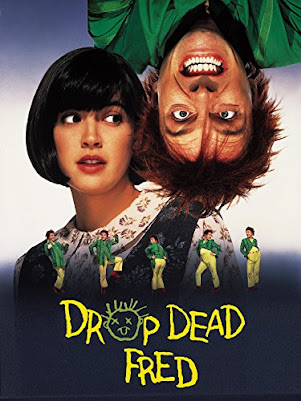
Drop Dead Fred – I love this 1991 romp starring meek wife Phoebe Cates (Fast Time at Ridgemont High), her domineering mother Marsha Mason (The Goodbye Girl), and the titular imaginary friend Rik Mayall (Blackadder). Despite the unevenness between the mature break up drama and the juvenile flashbacks, there's a certain innocence to the vignettes and individual character moments – chopped off hair, paint doused old ladies, shampooed carpet perils and all. Not to mention smoking while power walking, houseboat sinking, office dalliances ruined scene stealer Carrie Fisher (Star Wars) amid the doubly nostalgic nineties phone booths, dowdy styles, little girl pink and white bedrooms, and a vintage jack in the box. Between the overbearing mother, a philandering husband, fires, getting fired, and everything else going wrong, we understand the withdraw into a fantasy childhood world. Going without the stars early was not an option, but we should have seen all the past at the start rather than utilizing flashbacks that disrupt the momentum. Fortunately, the backstory endears the over the top rowdy as viewers see the wonder lost as little girls are made to bottle up their zest – disrupting the ability to face reality as an adult. Why confront the trauma or numb it all with pills when acting like a child is such devious grown up fun? The who's actually doing what wink at the destructive imaginary antics wraps the manifested problems and emotionally abusive relationships in cozy comforts. Sound effects and graphics are dated and some fashions garish, but the now relatively tame gross out humor is delicious fun thanks to Mayall's zingers and squashed head in the refrigerator. Fred's impish support alleviates the youth crying for help as parents punish instead of taking a look at themselves. Rather than mental healthcare, we neutralize our pain with destructive vices because as grown ups with responsibilities, we can't retreat into hi jinks without consequences every time we get scared. Adults may find the surreal dream sequence resolution either profound or preposterous, and kids will probably tune out on the mud pie mischief thanks to the underlying dark themes so it's tough to know who the audience is for this facing our fears lesson. Despite the pacing flaws, one must appreciate the rowdy as well as the tender, and this lighthearted protectiveness is more enjoyable than today's dark psychological trends. Ultimately, this is about regaining joy and cutting the crap out of one's life. “Be gone, Evil One!”


Empire Records – Everyday is Rex Manning day thanks to crop tops, short skirts, combat boots, head shavings, compact discs, and Gin Blossoms in this 1995 steeped slice of life. Liv Tyler (Lord of the Rings), Renee Zellwegger (Chicago), and Robin Tunney (The Craft) carry the independent record store versus corporate buyouts and damn the man anarchy as Anthony LaPaglia (Without a Trace), Debi Mazar (Younger), Ethan Embry (Can't Hardly Wait), Rory Cochrane (Dazed and Confused), and Maxwell Caulfield (Grease 2) clash over stolen receipts, has beens, shoplifting, and vinyl legacy. The stolen money and save the store underdog tangible isn't as important as the layered themes, cries for help, and pressure for these teens to get their messy lives together when everything after high school is still up in the air. Overachievers and drugs, virgin and bad girl reputations, slackers or skaters – it's easier to turn up the music and dance but fake funerals allow the ensemble to voice their fears. Unhappy coworkers become friends having a good time in this day where nothing happens yet so much happens. Cool sunglasses, drums, and motorcycles accent what looks like a neat place to work with colorful set design, store fronts, stairs, and rooftop spaces for visual interest, angst, and self-expression. Old credit card imprinters, cassettes, and record listening booths contrast then contemporary character styles – identifiable but unique rather than typical cheerleader, jock, geek. While of its time, the well chosen soundtrack reflects the characters and events in almost musical fashion, however editing and deleted or missing scenes are apparent as people and encounters seem important then go unexplained. The ending is typical with a silly rooftop concert that makes everything fine when throughout the film each of the characters expressly shout that nothing is actually fine. If you didn't see this then the tone may be dated or even downright wacky for viewers who weren't born yet. Thankfully for those that remember the nineties promise with CD changers, music videos, askew posters, and existential quarters glued to the floor as art this is a perfect time capsule. “Say No More (Mon Amour)” is also better than the drivel today, fight me.


Summer School – From the Texas Chainsaw Massacre classroom viewing and the sofa on fire party to the test drive crashes and teens drinking on the beach – there is quite a lot in this 1987 comedy starring Mark Harmon (NCIS), Courtney Thorne-Smith (Melrose Place), and Kirstie Alley (Cheers) that would not fly today. Director Carl Reiner (The Jerk) and writer Jeff Franklin (Full House) populate the eponymous course with slackers, a beach bum gym teacher, goofy field trips, saucy foreign exchange students, strip clubs, study bribes, surf boards, cute dogs, and more horror pranks. Shoulder pads, beach gear, and one earring styles maximize the eighties charm amid going to jail on roller skates, swearing, gestures, and raunchy innuendo both now tame yet then surprising for a PG-13 picture. Roll call introductions, lighthearted tunes, and peppy montages assure everyone has their absurd good fun as punchlines, visual gags, food, oral fixations, and performances accentuate the comedy rather than rely on today's gross out extremes. Serious issues such as family troubles, teacher romance, student crushes, teen pregnancy, toxic behaviors, dyslexia, and reaching for the youths the system lets fall through the cracks are touched upon as the kids themselves believe they are failures when they are capable of much more. Grades are not a reflection of one's potential, but not every educator is in it for the students and the underachievers must make strides against the smug jerks in their way. One can't expect the premise to make sense here – the number of students changes throughout, the big test doesn't mean much, and the parents are pleased with this education experience despite all the mayhem and the still failing grades. Fortunately, there's a certain then innocence and comfort to the ease and excuses. Nostalgic audiences can zone out and enjoy the preposterous or spot another goofy quip with each re-watch. Personally, I think of that “Tension-breaker. Had to be done.” scream often these days.


09 August 2021

90s Comfort Shows!


90s Comfort Food Binges

by Kristin Battestella


Don the baby doll dresses, velvet chokers, and butterfly clips – it's time to crank up that noisy modem and unwind with the raunchy humor, steamy action, and wholesome cowboys of these nineties comfort shows!


Married...with Children – “Whoa, Bundy!” From the ironic Frank Sinatra theme and Buck the Dog nabbing his five bucks to Psycho Dad and The Verminator, this 1987-1997 Fox sitcom was like no television show before it. The raunchy may be tame now, but it's fascinating to see how the unhappy, cheap, pathetic spin upended sitcom tropes and twee television cliches with a little help from Polk High and scoring four touchdowns in one game. The First season starts mild enough, but the betamax, mouse in the house extremes, and overdue 1957 library books escalate to wedding rings lost down a stripper's pants and unsatisfied in need of batteries taboos. Seasons Two and Three shockingly address periods in “The Camping Show” and scandalous lingerie for “Her Cups Runneth Over” yet the so-called lost episode “I'll See You In Court” isn't so pearl clutching today. Many of the series' most memorable episodes come in Season Five with the “We'll Follow the Sun” Labor Day premiere summing up the torment of our working man before the baseball twists in “The Unnatural,” Peg redecorating the bathroom for “A Man's Castle,” the Allante of “Kelly Bounces Back,” and the stolen trophies in “All Nite Security Guard.” Pamela Anderson thrashing on the fantasy bed, the dollar on a string at the nudie bar, barbecues cooked with a dead aunt's ashes, the super market shenanigans of “You Better Shop Around,” and the inability to remember an old song in “Oldies but Young 'Uns” make up for the terrible Top of the Heap backdoor pilot and the falling flat “It's a Bundyful Life.” The departure of Steve Rhoades and the introduction of Jefferson D'Arcy marks an obvious turning point as Season Six struggles with poor pregnancy plotlines and disjointed fun in episodes like “Kelly Does Hollywood” and “Al, Bundy, Shoe Dick.” Of course, that first half of Year Six is retroactively written off as a dream, and “The England Show” didn't need to be three parts, dragging the then weekly before the Season Seven premiere introduced the disastrous Seven character and tired money or insurance schemes. “Peggy and the Pirates” is fun in of itself, but the subsequent “Go for the Old” is a better example of the demented Bundy brand alongside Vanna White's propositioning for Al and the orgasmic speeches of “Banking on Marcy.” Boudoir Peggy billboards and an accidental circumcision bolster Season Eight while “Ride Scare” tackles environmental hypocrisy with the show's particular brand of humor – and Seven missing on the milk carton. The “I Want My Psycho Dad” two-parter addresses viewer complaints and cancel culture before we knew what it was to blame entertainment instead of bad parenting, but Year Nine's weekly gags run thin with clip shows, failed college spin offs, and preposterous celebrity stunts. Downright mean racism, sexism, homophobia, and fat shaming make for numerous wrongs, and rather than subverting sitcom tropes, the later seasons are fantasy parody with outlandish self-hype and dated of the moment references. The disastrous attempt to build the reincarnated Lucky a doghouse in “Al Goes to the Dogs,” NO MA'AM's bid to become a tax exempt church, and Christmas phone sex with the unseen Grandma Wanker in “I Can't Believe It's Butter” start Season Ten well, but by the Final season, it's clear the show has run out of ideas. While it's a pity there's no properly wild Newhart style finale, the shear amount of episodes here makes for the perfect turn off your brain background and chill nostalgia.


Pacific Blue – Today it's tough to believe cops on bikes at the beach could run for five seasons with one hundred and one episodes, and the 1996 Pilot immediately makes me feel sixteen years old thanks to trick bicycles, neon graffiti, and rollerblading culprits. Beach volleyball, bikinis, surfing, and sun kissed music montages rift on Baywatch amid too cool for school bike patrol quips and lieutenant Rick Rossovich's Top Gun cred. Early guest kitschy matches the X Games style chases, stunts, and wheelies well filmed with low angles, zooms, up close adrenaline, and so fast it must be slow motion strobe. The intense up, up, up action lets viewers forgive the feeble reasons why our bike police solve crimes. Boardwalk crowd control, sure, but undercover for robberies and vice? Would we watch horseback mounted police galloping in cinematic formation and leaping over the inferior cop cars to nab dangerous drug dealers? Bomb threats, nude beach protests, and preposterous bike to helicopter shenanigans aside, the First Year ironically offers timely police shootings, brutality, and racism. Traditional A/B even C plotting, however, mixes the good with run of the mill cop plots and tired Vietnam vet gone bonkers tropes. Bad ass bike perspectives or chip on the shoulder at demeaning the unit attitudes change as needed – interfering with grizzly murders, on the job injuries, and previously unsolved angst. Sexy male and female partners live on the edge in the bedroom and on the beat, but the stepped out of the shower and into the skimpy towel nineties sex scenes are so innocent and the work versus pleasure moves hot in one episode then cold across seasons. Girlfriends are assaulted for the man's revenge, which gets dropped in favor of skateboarding villains of the week. Third season women in the military, school shootings, hate crimes, and homophobia are decent but too many basketball plots, undercover romance stings, drug heists, and foreign intrigues get repetitive. A Baywatch crossover with Carmen Electra makes one wonder why this series wasn't deliberately created as a tandem franchise, but when episodes get serious with deposition style frankness, it's silly thanks to the thongs everywhere. The overlong episodic seasons short change the self-aware knowledge that the public hates doughnut eating, pension waiting, Rodney King beating bullies in blue; cops are framed, suspended, arrested, and/or vindicated all in forty-five minutes. Despite quality strides – and shout outs to fellow USA nineties treat La Femme Nikita, which our cops watch faithfully – deaths and Vegas weddings lead to a huge cast changeover for Season Four with uneven introductions and a too crowded ensemble. Now that they wear pants more often than bike shorts, the eye candy and desperate need to be seductive goes overboard thanks to obnoxious attitudes and falling flat flirtations. Maybe saucy maybe not roommates, date rape, and porn stings are not endearing, and repeated pregnancy scares get old alongside the contrived rookie mistakes and eye rolling bad behaviors. The new ~edgy~ players spend more time rough housing off the book for personal drama while never identifying themselves as cops. Female boxing stunts, Hawaii stints, film noir styles, and even occult episodes are so far removed from the original if thin premise, and serious internal affairs plots or real time kidnapping hours jar with boardwalk kids shooting themselves out of homemade cannons. Everyone is so angry and unlikable, and rather than some adrenaline fueled fun, the last year and a half is a chore to finish. They barely even ride their bikes! Fortunately, antennas, clunky mobile phones, giant projector televisions, 28.8 modems, video dating services, and Walkmans with real headphones provide bemusing chuckles to match this perky, entertaining patrol.


Snowy River: The McGregor Saga – Although this 1993-96 Australian television series is based on the same Banjo Paterson poem as the 1982 The Man From Snowy River film, it is otherwise unrelated to the movies, forging its own path with rival ranchers and gold claims. Brother versus brother and secret family histories clash in First season arcs amid railroad intrigue, kidnappings, banking schemes, dynamite, and shootouts. Soon to be famous faces like Hugh Jackman (X-Men) and guest stars such as Dean Stockwell (Quantum Leap) tackle desperate drives, stampedes, big cattle barons, Aboriginal issues, and racism. Although more masculine adventure than crusade of the week a la Dr. Quinn, Olivia Newton-John (Grease) and Tracy Nelson (Father Dowling Mysteries) delight as strong women in multi-part episodes addressing abuse, voting rights, and women in the workplace. Episode of the week changes in the Second season, however, are hit or miss when guest plots leave less room for the regulars. Then tame unchaperoned kisses aren't so scandalous and over the top chip on the shoulder scowling wears thin fast, but the older couples are charming alongside former flames now widowed back in town and good old fashioned duels. One off entries are great when the regular cast developments stick, but pacing suffers when two or three unrelated stories compete per hour. Romance resets and supporting townsfolk are dropped or forgotten, and the Third season goes downhill with cliché husbands back from the dead, orphan boy obnoxiousness, and even the old blind for an episode requisite. It's also odd to see Guy Pearce (Lockout) as a background player with little to do until the series realizes his worth in later seasons. Walking skirts, women's vests, and cameo jewelry look the period part, and those save a horse ride a cowboy nineties looks are ironically turn of the century appropriate, but the big hair strays into Dynasty goes west Glamour Shots. The interiors are small, but the western dressings match the muddy, authentic outdoors and picturesque photography. Intriguing opportunities in the shortened Final year get done in by weekly derivatives and too many cast departures, and chasing episodes on The Family Channel back in the day probably hindered Snowy River's popularity stateside. However, with only sixty-five episodes and various streaming options today, it's easy to marathon the Down Under Lonesome Dove entertainment. It's mature without being tawdry, family friendly without being juvenile, and perfect for a wholesome Saturday Night.